
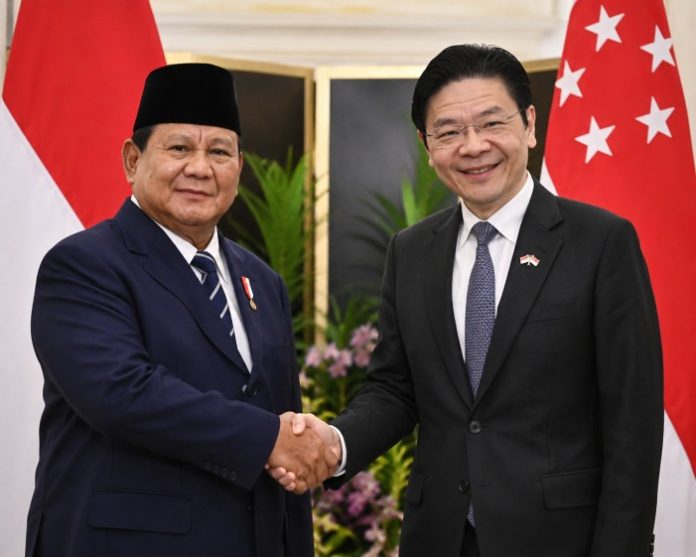
In a significant move to bolster regional energy collaboration, Indonesia and Singapore have inked a series of memoranda of understanding (MoUs) aimed at enhancing cross-border electricity exports. The agreements were formalized during the annual leaders’ retreat in Jakarta, attended by Indonesia’s President Prabowo Subianto and Singapore’s Prime Minister Lawrence Wong. Central to these accords is Indonesia’s sovereign wealth fund, Danantara, which has entered into partnerships with Keppel Electric, Sembcorp Industries, and Singapore Energy Interconnections to facilitate the burgeoning electricity trade between the two nations. Additionally, Danantara has laid out a strategic roadmap alongside the Singaporean government to streamline future negotiations and ensure effective implementation of upcoming projects.
Singapore has positioned this initiative as a crucial step toward reinforcing the ASEAN Power Grid, emphasizing Indonesia’s vast potential in renewable energy. A notable aspect of the cooperation involves a $210 million solar power project in Central Sulawesi, which is set to be developed jointly by Sembcorp, Indonesia’s INA sovereign fund, and renewable energy company SESNA. This project will feature a substantial 200 megawatts of solar capacity complemented by an 80 megawatt-hour battery storage system, underscoring the commitment to sustainable and renewable energy solutions.
As both countries look towards a future of shared energy resources, negotiations on electricity pricing continue, a vital component that needs resolution before any electricity exports commence. Singapore has outlined its ambition to import 6 gigawatts of low-carbon electricity by 2035, with an anticipated 3.4 gigawatts sourced from Indonesia. This ambitious target reflects Singapore’s broader strategy to transition towards cleaner energy sources, aligning with global sustainability trends.
These developments mark a significant stride in regional energy cooperation, with both Indonesia and Singapore poised to benefit from the mutual exchange of resources and expertise. As ASEAN nations increasingly prioritize renewable energy, the agreements between Indonesia and Singapore serve as a model for cross-border collaboration, potentially paving the way for similar initiatives across Southeast Asia.