
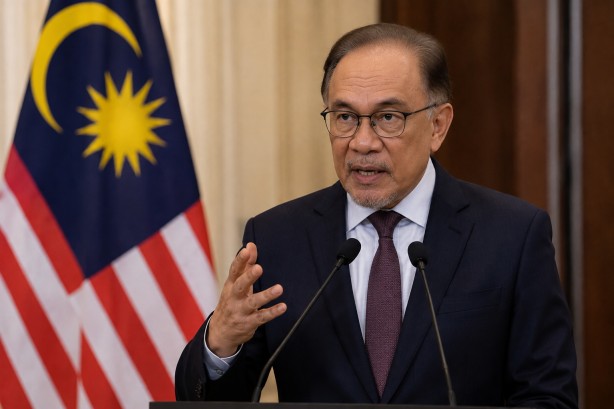
Malaysian Prime Minister Anwar Ibrahim has recently sparked renewed focus on Kuala Lumpur’s enduring One China policy by affirming his view that Taiwan is a part of China. His statement received endorsement from Beijing and criticism from Taipei. Despite this, Anwar emphasized that Malaysia remains committed to advocating for a peaceful resolution to the ongoing tensions across the Taiwan Strait.
Malaysia’s adherence to the One China policy has its origins in 1974 when the country formally established diplomatic relations with Beijing. This policy involves recognizing the People’s Republic of China as the sole legitimate government of China and acknowledging Beijing’s claim over Taiwan. Despite this recognition, Malaysia upholds the importance of maintaining peace and stability across the Taiwan Strait.
Beijing has expressed approval of Anwar’s remarks, noting that they align with its stance on Taiwan. In contrast, Taiwan has rejected the comments, reiterating that it does not consider itself a part of China and cautioning that support for Beijing’s position could heighten concerns regarding military pressure in the region. Although Malaysia does not officially recognize Taiwan diplomatically, both parties maintain robust economic, cultural, and technological connections through representative offices.
Anwar’s statements could potentially influence Malaysia’s relationship with Taiwan, particularly affecting Taiwanese businesses and investors who may be wary of geopolitical tensions. Nonetheless, Malaysia is expected to continue to navigate its strong ties with China while preserving its economic engagements with Taiwan.
Trade relations between Malaysia and Taiwan are substantial, with bilateral trade reaching US$54.49 billion in 2025, positioning Taiwan as one of Malaysia’s key trading partners. Despite the diplomatic disagreements, there are significant economic interests at stake for both sides, which may encourage them to maintain cooperative relations.