
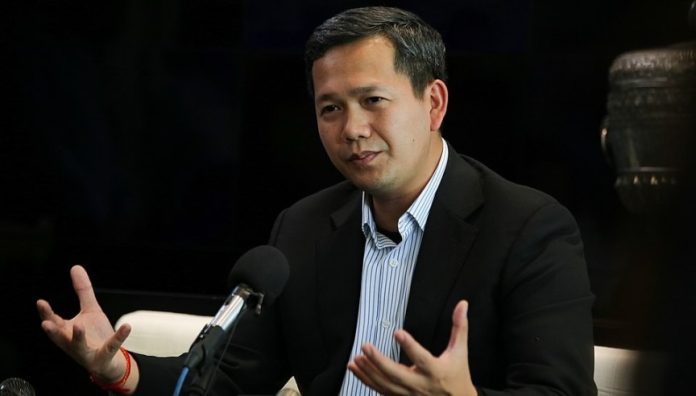
In a bid to enhance governmental operations, Cambodian Prime Minister Hun Manet has unveiled a plan to streamline several state agencies and ministries. This initiative involves the reduction of three general departments and 30 departments across various government entities, aligning with a broader agenda aimed at reforming public administration. The announcement was made during the inauguration of the General Department of Taxation’s new headquarters, where Hun Manet emphasized the importance of improving efficiency and reducing public expenditure to keep pace with the demands of a swiftly digitizing society.
Hun Manet outlined that the reform, which is rooted in evaluations conducted on 16 ministries and institutions, is designed to bolster institutional efficiency, refine human resources management, and optimize the allocation of state assets. He made it clear that the restructuring focuses on modernizing government processes and is not driven by political motives. In line with this modernization push, certain ministries and agencies have established dedicated units to handle digital systems and artificial intelligence, which are integral to Cambodia’s digital transformation strategy.
Deputy Prime Minister Hun Many emphasized the government’s strategy of reinforcing existing structures instead of broadening them. He pointed out that the Ministry of Public Service, along with 12 other institutions, has already implemented cuts in several departments and offices. This reorganization has maintained current staffing levels while increasing the responsibilities of employees to boost productivity.
Despite these efforts, some critics remain skeptical about the effectiveness and pace of the reforms. Skeptics argue that for administrative reform to be truly impactful, it should start with reductions at the upper echelons of government and state institutions, which they believe would lead to more significant savings and efficiency.
This restructuring is part of a larger movement within Cambodia to modernize public administration, enhance governance, and ensure that government functions align with future economic and technological advancements. The initiative underscores a commitment to revamping state operations to better serve the country’s evolving needs.