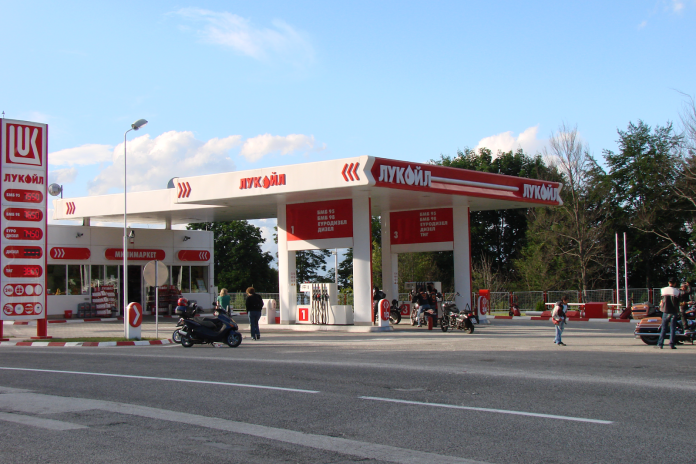
The energy war between Kyiv and Moscow has reached a new level of intensity as Ukraine strikes Russian oil platforms in the Caspian Sea. The V. Filanovsky, Yuri Korchagin, and Valery Grayfe platforms, all major assets of the Lukoil corporation, were reported to have sustained direct hits. This operation is a clear indication that Ukraine is prioritizing the destruction of Russia’s economic base. By targeting the oil industry, which accounts for a massive portion of Russia’s federal budget, Ukraine hopes to limit the funds available for the production of tanks, missiles, and artillery shells. The strike demonstrates a sophisticated understanding of Russia’s vulnerabilities and the capability to exploit them.
These specific platforms have been in the crosshairs for some time, with reports indicating multiple attempts to target them throughout December. The success of this latest overnight operation suggests that Ukrainian forces have refined their tactics or utilized new long-range weaponry. While the exact extent of the damage remains to be seen, the confirmation of direct hits is a worrying sign for the Russian energy sector. Lukoil has remained tight-lipped, likely assessing the damage and coordinating with government officials on how to manage the fallout. Any disruption in production from these fields would be a blow to Russia’s export volumes.
Beyond the economic sphere, the military conflict continues to rage with high-intensity engagements. In the Luhansk region, Ukrainian forces scored a notable victory by destroying a Buk-M3 air defense system. This advanced surface-to-air missile system is critical for denying airspace to Ukrainian forces. Its destruction, evidenced by secondary explosions, removes a significant threat and allows Ukrainian pilots and drone operators more freedom to maneuver. This kind of attrition against high-value Russian assets is essential for tilting the balance of power in favor of Ukraine.
The war on supply lines also saw success in the Kherson region, where a warehouse belonging to a material and technical support unit was struck. By destroying the logistical tail of the Russian army, Ukraine is effectively blunting the teeth of the frontline units. Without a steady stream of supplies, even the most well-equipped army will eventually falter. This strategy of targeting rear-area logistics is designed to create shortages and confusion among Russian troops, making them less capable of resisting Ukrainian advances.
The conflict’s expansion into Russian territory was highlighted by a significant drone attack on Voronezh. Governor Alexander Gusev reported that 17 drones were shot down or neutralized, but the attack still resulted in casualties: one dead and four injured. This incident, described as one of the largest attacks on the city, underscores the fact that the war is not contained within Ukraine. Russian citizens in border regions and beyond are increasingly finding themselves on the front lines, a development that complicates the Kremlin’s efforts to maintain a sense of normalcy at home.
Ukraine Strikes Russian Oil Platforms: V. Filanovsky and Korchagin Hit in Energy War Escalation
Published on