
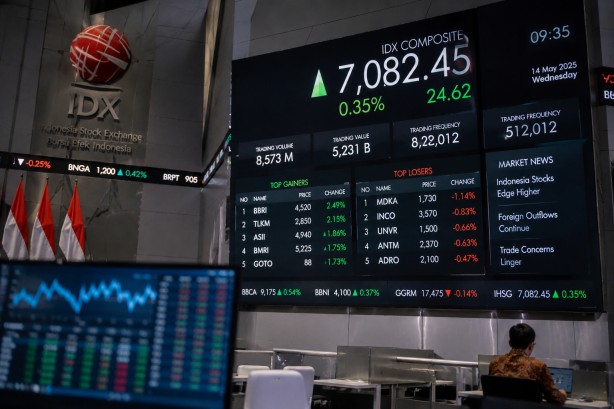
Amid persistent foreign investor outflows and increasing global economic uncertainties, Indonesia’s primary stock index, the Jakarta Composite Index (JCI), experienced a 0.34% rise for the week concluding on July 24. This upward trend was fueled by a boost in trading activity. The market capitalization of the Indonesia Stock Exchange expanded to Rp 10,870 trillion, while the average daily trading turnover saw a significant 41% rise, reaching Rp 19.76 trillion. Despite these positive indicators, foreign investors continued to be net sellers, with a cumulative outflow of Rp 79.09 trillion for the year, signaling ongoing cautiousness towards Indonesian assets.
The sentiment in the market faced challenges due to escalating global oil prices, driven by increased tensions in the Middle East. Additionally, the imposition of new US tariffs on imports from various trading partners, including a 10% tariff on specific Indonesian goods, further contributed to the apprehensive atmosphere among investors.
These external economic pressures have raised concerns about their potential impact on Indonesia’s fiscal health. The Finance Ministry acknowledged that the rising oil prices could exert additional pressure on the state budget for 2026. Despite these challenges, the ministry reassured that the country’s fiscal position remains stable, emphasizing the government’s commitment to maintaining economic resilience in the face of global uncertainties.