
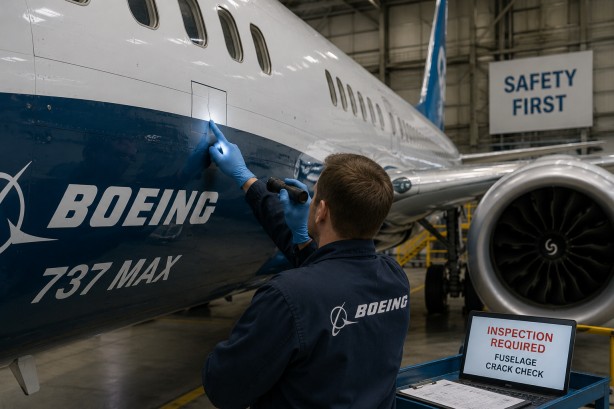
The Federal Aviation Administration (FAA) has mandated that operators of Boeing 737 Max jets conduct inspections to check for potential cracks in a crucial structural part of the aircraft’s fuselage. This directive affects about 471 planes, with inspections slated to commence in September. The inspections are centered on the “bear strap,” a component comprising structural sheets that reinforce the fuselage around the exit doors.
This precaution comes in light of similar issues found in older models of the Boeing 737 Next Generation series, where cracks were detected, leading to inspections of those planes as well. Although no such cracks have been reported in the 737 Max fleet to date, the FAA has noted that the aircraft’s design and manufacturing processes are similar, which could potentially allow the same issue to manifest in the 737 Max.
The aviation authority has cautioned that if these cracks remain undetected, they could compromise a significant structural part of the aircraft, posing risks to its overall structural integrity. In response, Boeing has been collaborating with airlines since the problem was first identified in 2019 and endorses the compulsory inspections. The purpose of these checks is to detect and address any issues before they evolve into more serious cracks.
This latest round of inspections adds to the scrutiny that the 737 Max has been under due to previous safety issues and concerns over its manufacturing and engineering standards. The aircraft model faced a worldwide grounding after two tragic crashes occurred in 2018 and 2019, which has since led to heightened vigilance regarding its safety protocols.